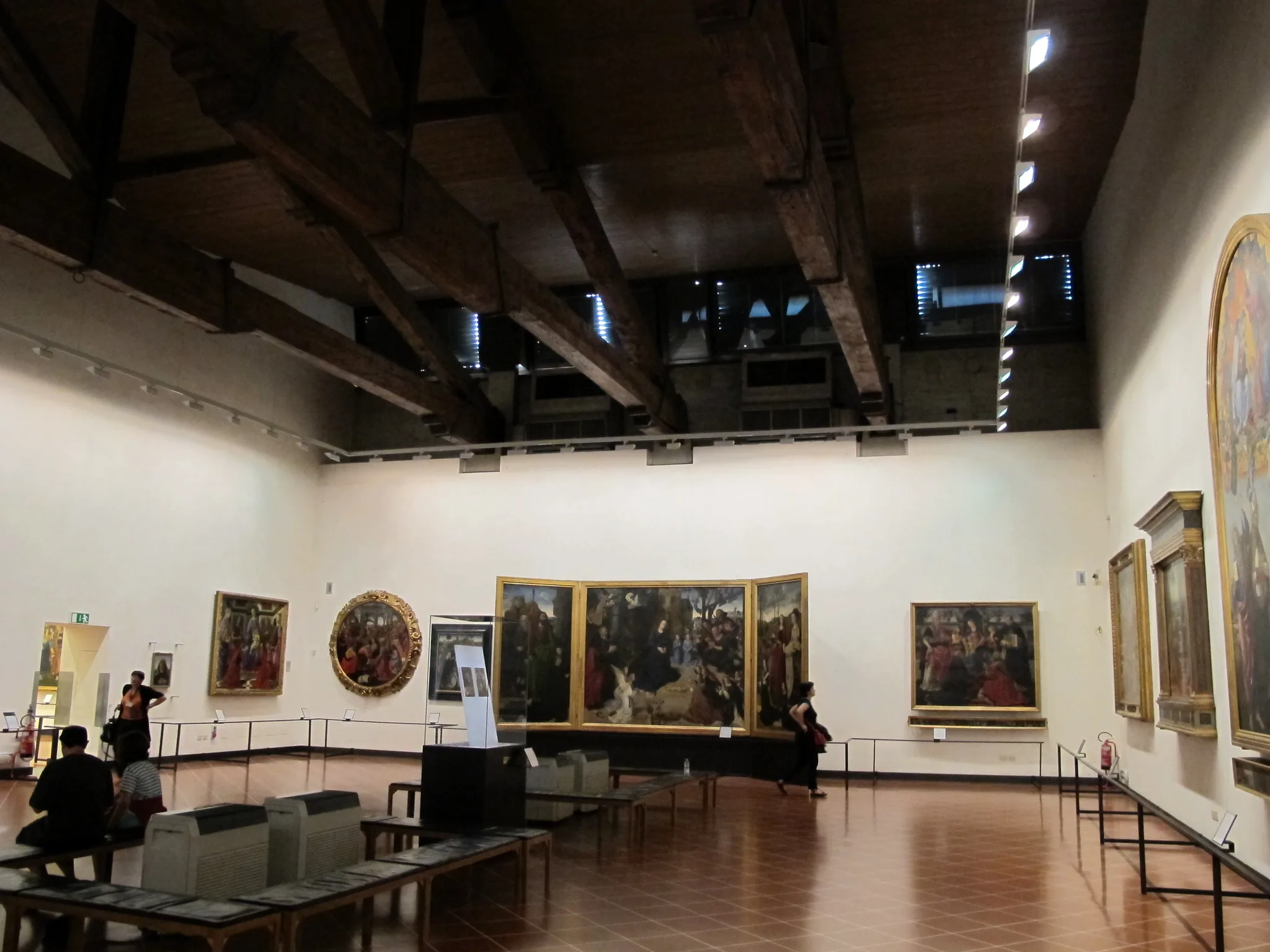
The highlights you came to see
The works are listed in the optimized route order. We recommend following the indicated sequence to minimize walking.
1 · 10 min
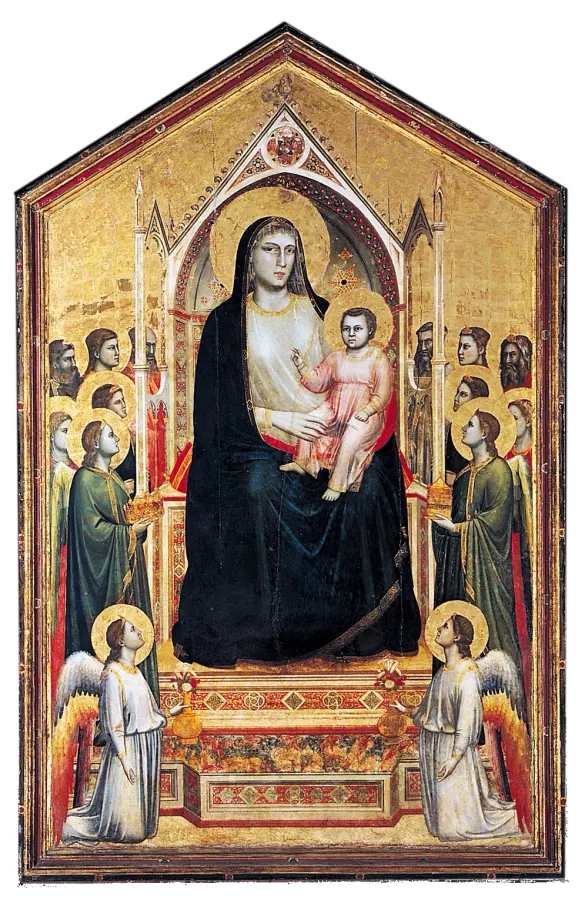
Ognissanti Madonna
Room A4, Giotto – Cimabue, second floor
Giotto renewed a traditional gold-ground Maesta by giving bodies weight, space and human attention. The panel is crucial to the history of Western painting because sacred hierarchy begins to occupy a believable physical world without losing monumentality.
2 · 10 min
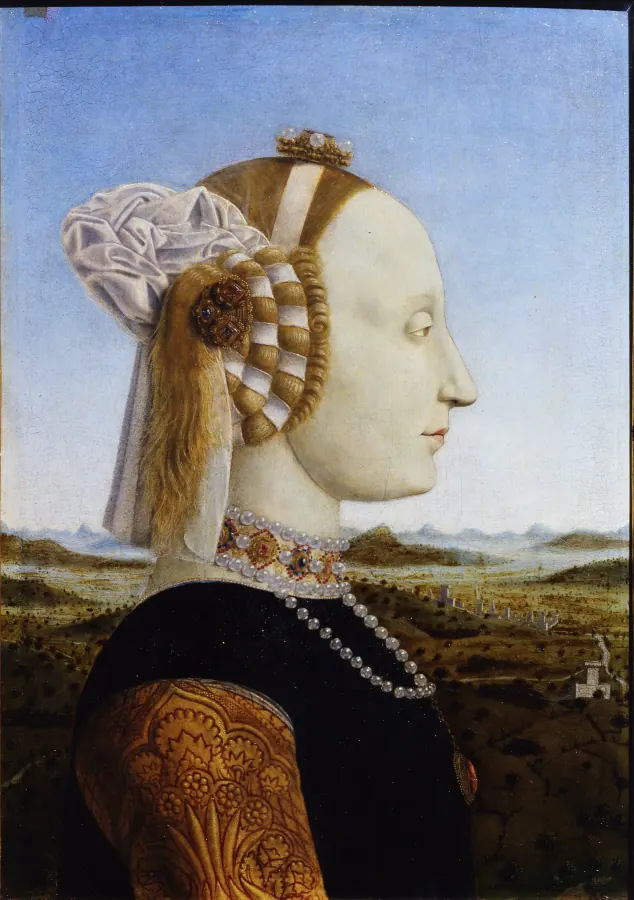
Duke and Duchess of Urbino
Room A9, Paolo Uccello – Filippo Lippi – Piero della Francesca, second floor
Piero della Francesca joined exact likeness, dynastic memory and an immense measured landscape in one of the Renaissance's defining portrait diptychs. The panels make political identity appear calm, rational and continuous with the territory it governs.
3 · 10 min
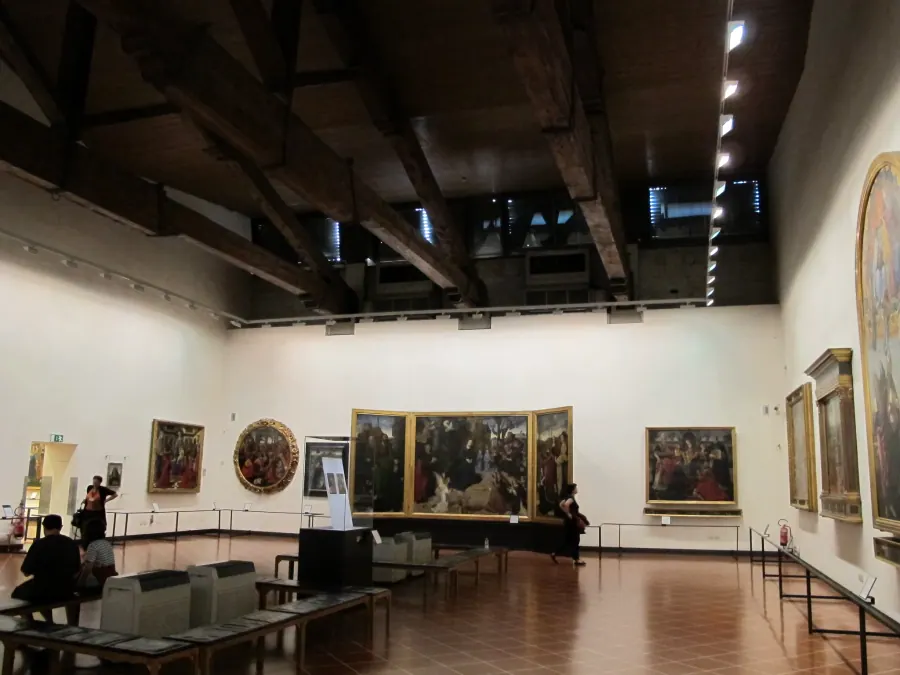
Botticelli Rooms
Botticelli Rooms, second floor
The Botticelli Rooms turn display design into interpretation. Their 2026 arrangement places pagan and Christian images in deliberate dialogue, allowing visitors to follow Botticelli's artistic and intellectual development rather than encounter isolated icons.
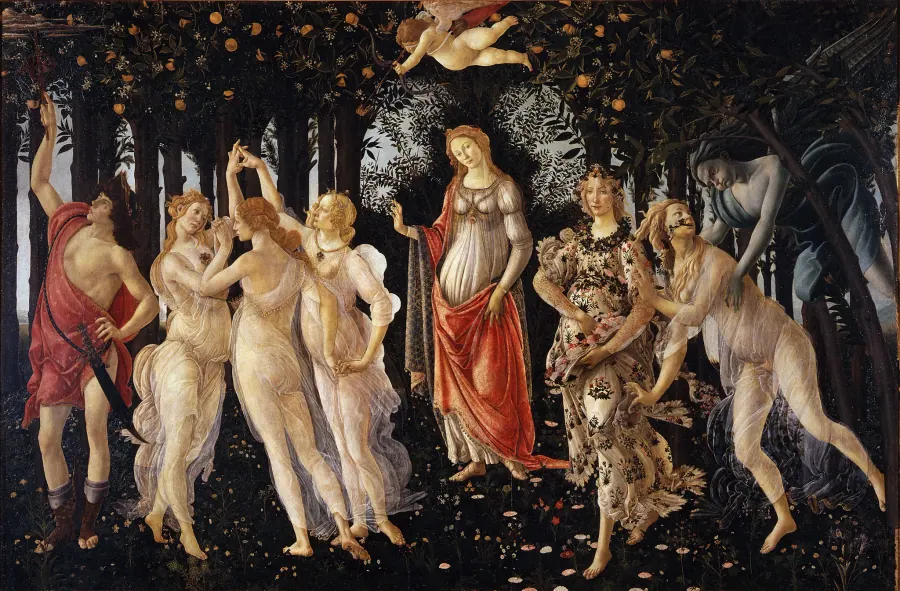
4 · 10 min
Primavera
Botticelli Rooms, second floor (official artwork location A9, Filippo Lippi)
Primavera is a landmark of Renaissance mythological painting because it presents classical figures not as isolated quotations but as actors in an enigmatic garden of love, transformation and abundance. Its refusal to yield one fixed meaning is part of its historical importance.
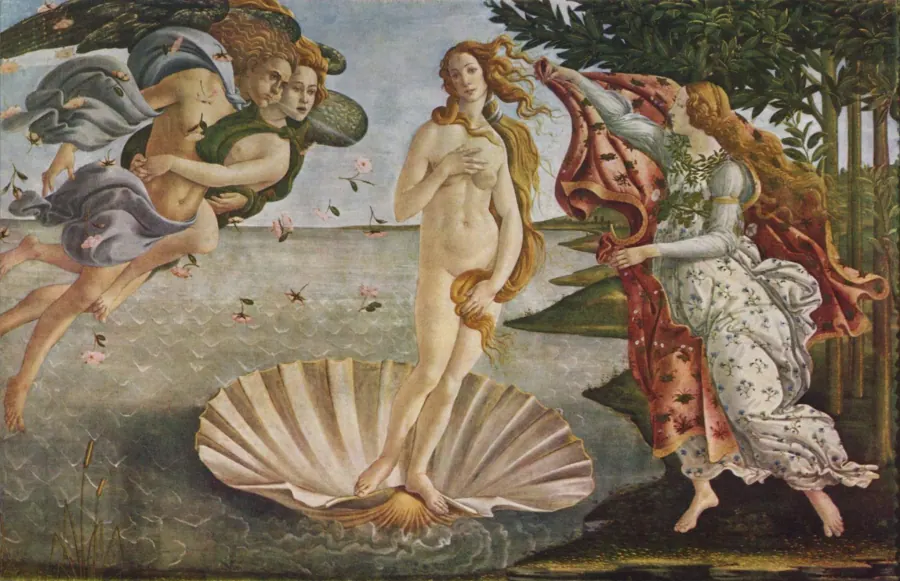
5 · 10 min
The Birth of Venus
Botticelli Rooms, second floor (official artwork location A9, Filippo Lippi)
Botticelli turned a classical goddess into one of the defining images of the Florentine Renaissance. The painting joins ancient sculpture, contemporary poetry and an exceptionally linear style in a work made for an elite domestic setting rather than a church.
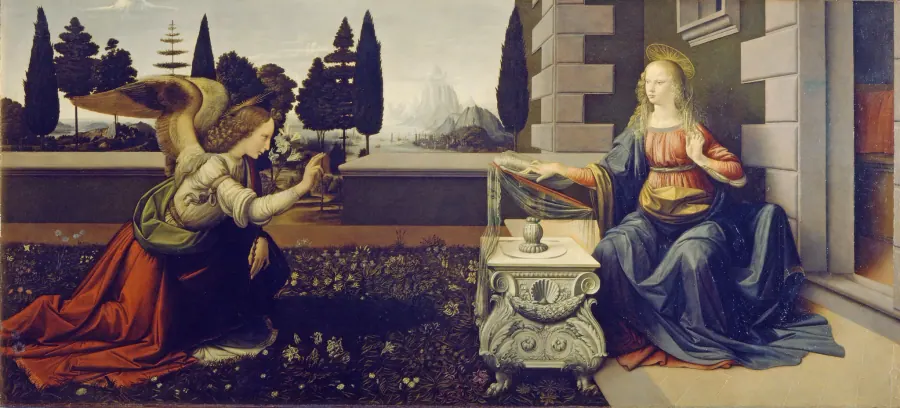
6 · 10 min
Annunciation
Room A35, Leonardo da Vinci, second floor
This youthful work shows Leonardo testing how sacred history could inhabit a physically observed world. Bird anatomy, botanical detail, perspective and atmospheric light already reveal the union of art and investigation that would define his career.
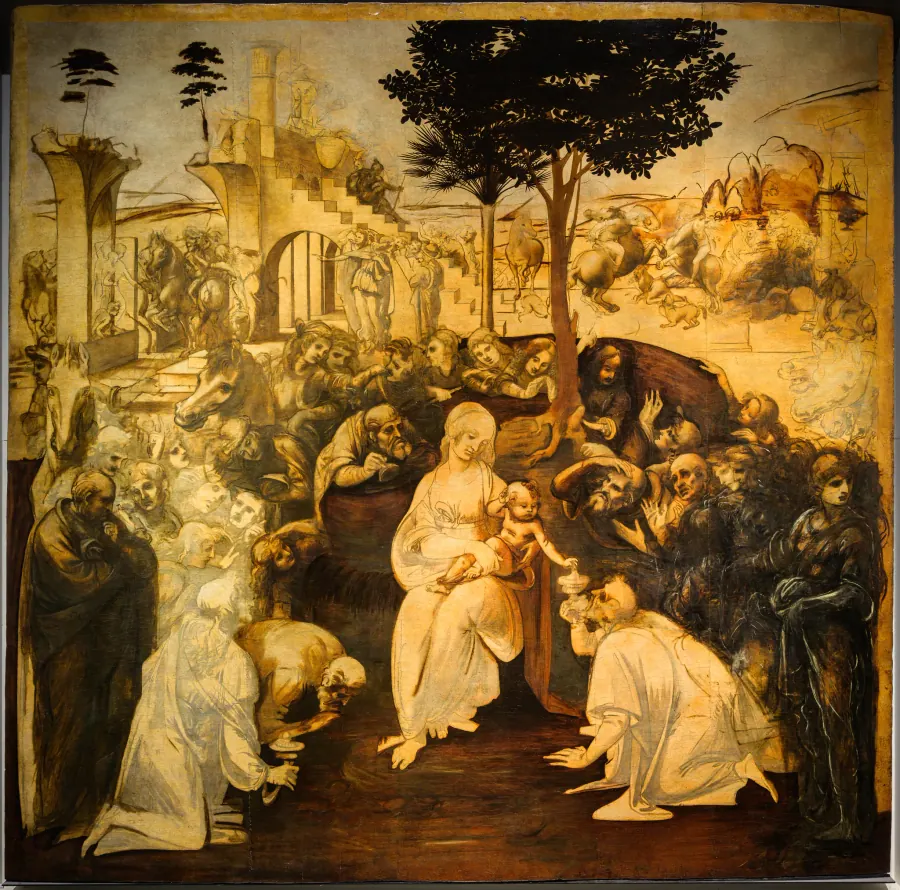
7 · 10 min
Adoration of the Magi
Room A35, Leonardo da Vinci, second floor
Leonardo's unfinished panel makes artistic invention visible. Instead of presenting a polished surface, it preserves the movement from first drawing to modelled figures and reveals how he reorganised a traditional Epiphany into a psychological drama.
8 · 10 min
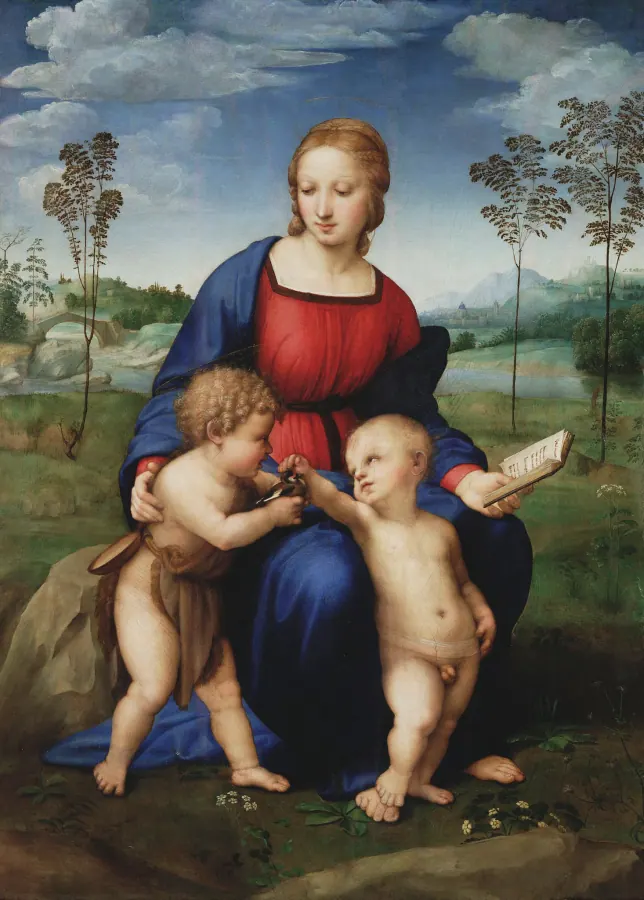
Madonna of the Goldfinch
Room A38, Raphael and Michelangelo, second floor
Raphael transformed a devotional subject into an image of natural affection governed by perfect compositional clarity. The work shows how his Florentine encounter with Leonardo and Michelangelo enriched, rather than erased, the graceful language formed in Urbino and Perugia.
9 · 10 min
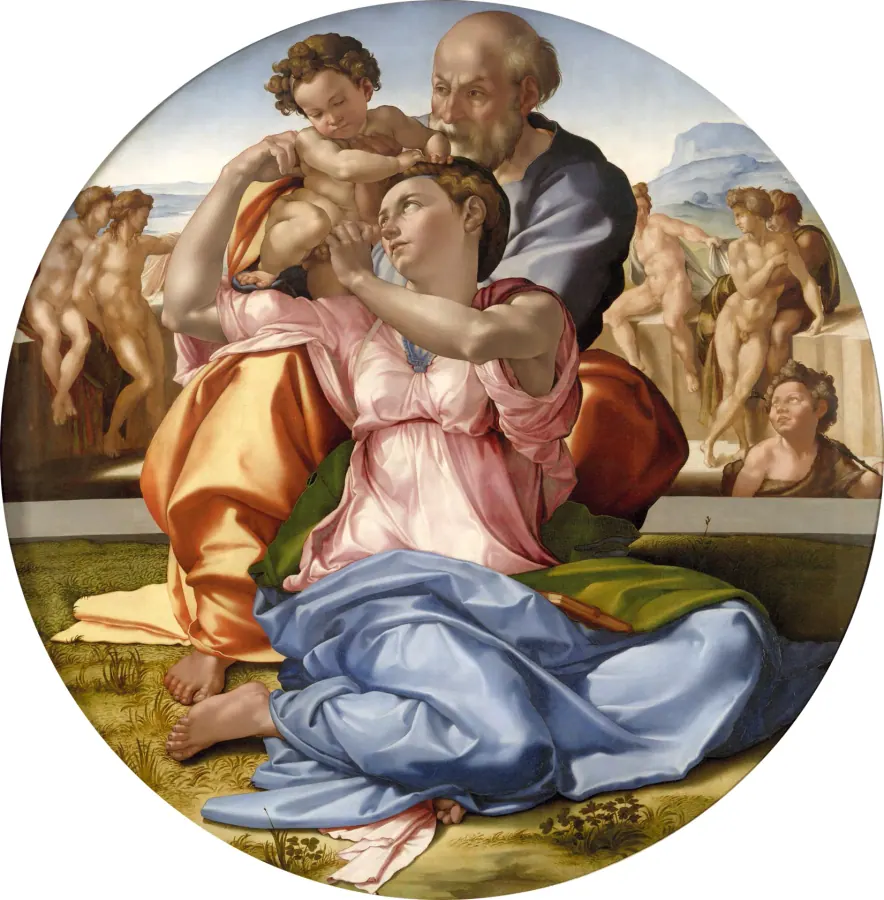
Doni Tondo
Room A38, Raphael and Michelangelo, second floor
The Doni Tondo is Michelangelo's only securely attributed finished panel painting. It brings a sculptor's understanding of bodies into brilliant colour and turns a domestic Holy Family into a manifesto for the powerful, twisting figure.
10 · 10 min
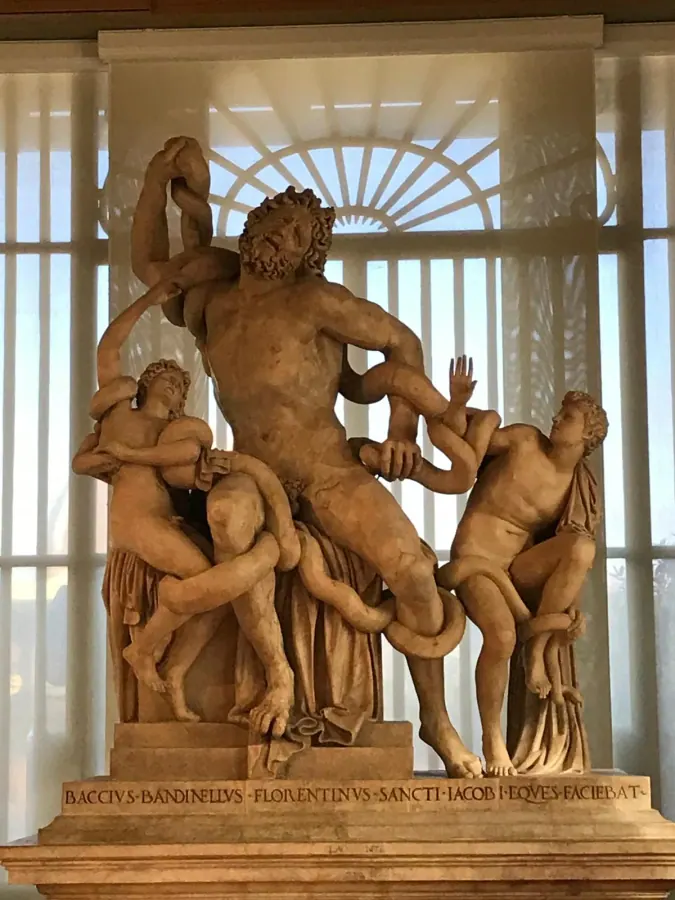
Laocoön (copy)
Third Corridor, second floor
Bandinelli's marble is not a secondary souvenir but a Renaissance argument with antiquity. By copying and completing the newly famous Vatican Laocoon, he tested modern sculpture against an ancient benchmark of anatomy, pain and invention.
11 · 10 min
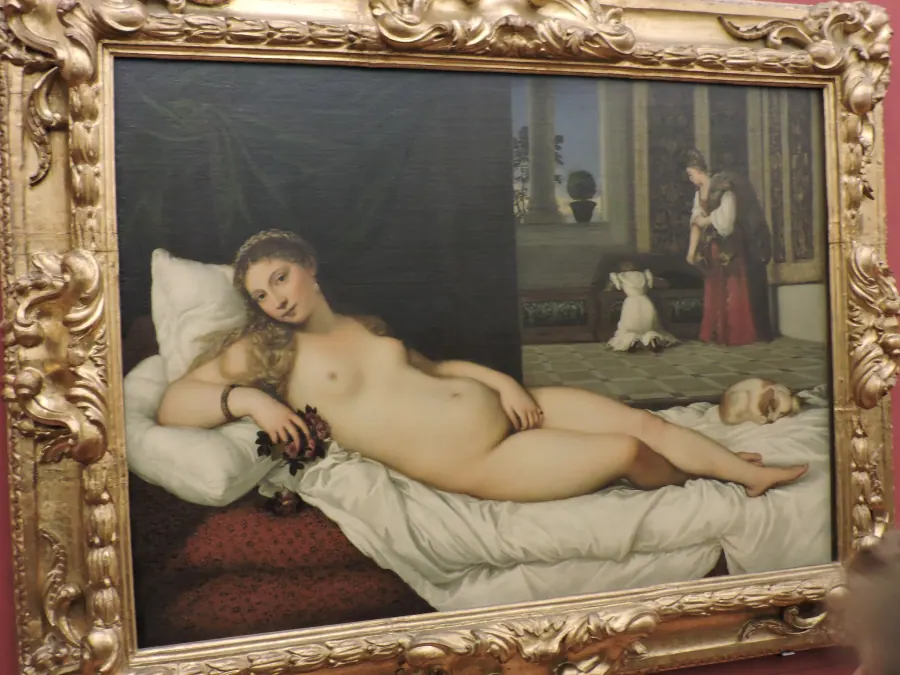
Venus of Urbino
Room D22, Titian and Venus of Urbino, first floor
Titian recast the reclining classical nude as a vividly present woman in a contemporary Venetian interior. The painting became a touchstone for later artists because colour, gaze and domestic detail make ideal beauty inseparable from material life.
12 · 10 min
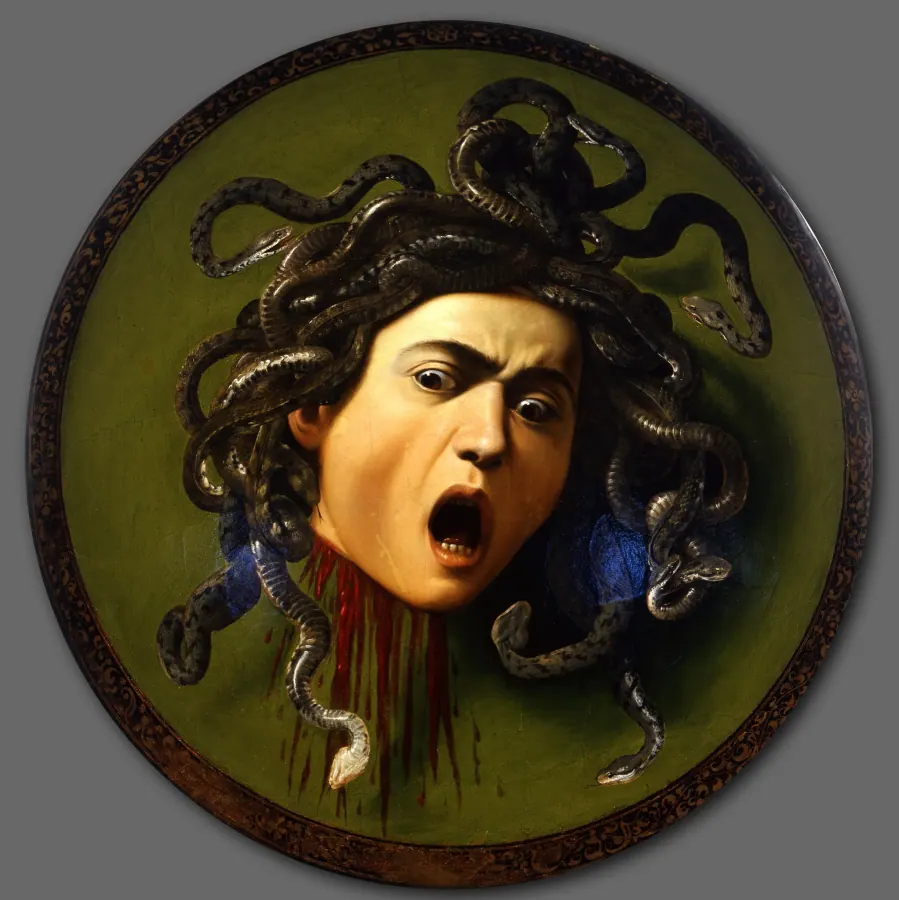
Medusa
Room D31, Caravaggio – The Medusa, first floor
Caravaggio made painting behave like both image and weapon. By placing Medusa's newly severed head on a convex parade shield, he joined myth, illusion and a terrifying study of expression in an object designed to confront its viewer.
2 HOURS · 10 LANGUAGES · OFFLINE
Everything you need for a focused visit
Follow a curated route
Listen to the audio guide
Read descriptions in your language
Audio guide in your language
Works fully offline
Free to use
Available in 10 languages
How it works
- 1Download the guide
- 2Choose your language
- 3Keep track of your progress
- 4Start the 2-hour tour
- 5Follow each stop
- 6Listen and read in your language
NO SIGNAL? NO PROBLEM.
Works completely offline
After purchase, download the audio guide language you need. The route, written descriptions, progress and badges stay available inside the museum.
Frequently asked questions
Is the app free?
Yes. The app is free to download and use for the route and written guide. The audio guide is available as a one-time in-app purchase for 2.99 EUR.
Does it work offline?
Yes. The written guide stays available offline after installation. Audio can be downloaded by language after the 2.99 EUR in-app purchase.
Is it an official museum app?
No. This is an independently created visitor guide and is not affiliated with, endorsed by or sponsored by the museum unless explicitly stated.
How long does the tour take?
The curated route is designed to cover the essential highlights in about two hours, although you can pause or spend longer at any stop.
Do I need internet inside the museum?
No. The content needed for the visit is available offline, so poor reception or unavailable museum Wi-Fi will not interrupt the tour.
Does the app include audio?
Yes. Every stop can include audio. The written guide is free, while audio playback is unlocked with the 2.99 EUR in-app purchase.
Are descriptions and audio available in my language?
Yes. The written descriptions use the language selected in the app. After purchase, you can download the audio guide in any supported language.
Which languages are supported?
The guide supports English, Italian, French, Spanish, German, Portuguese, Dutch, Japanese, Chinese and Korean, including both text and audio.
Uffizi Galleries
Ready to see the highlights?
Descriptions and audio guide in your language.